

Best 3D Printers for Jewelry: A Clear, Practical Guide for Jewelers in 2025
Jewelry design has changed dramatically over the last decade. Hand carving wax blocks, fixing tiny shapes with blades, and spending hours on manual corrections are no longer the only ways to bring ideas to life. Today, resin and wax 3D printers have become standard tools in jewelry workshops around the world. They offer precision, clean surfaces, reliable casting output, and — most importantly — the freedom to create complex forms that are impossible with traditional methods.
But with so many machines available, choosing the right one is not easy. Some printers are great for ultra-detailed casting patterns, others suit small studios working on a tight budget, while a few are made specifically for professional jewelry houses that handle volume production daily.
This guide breaks down the Best 3D Printers for Jewelry in 2025 in a simple, straightforward way. Whether you design engagement rings, pendants, earrings, or custom one-off pieces, you’ll find clarity on what actually matters — accuracy, surface finish, reliability, and real casting performance.
Why Jewelers Need a Specialized 3D Printer?
Not every 3D printer can handle jewelry work. A machine may be excellent for toys, prototypes, or engineering models yet completely unsuitable for casting-grade objects. Jewelry printing is a different category altogether, and jewelers expect extremely tight tolerances.
Here are the areas that matter most:
1. Precision for Small Details
Jewelry pieces often include tiny claws, pavé settings, small bridges, filigree, or very thin wall sections. A general-purpose resin printer may struggle with this level of detail. A jewelry printer must be able to produce:
- Clean prong tips
- Sharp engravings
- Consistent wall thickness
- Perfect symmetry in micro-features
If these areas are inconsistent, casting will fail or require unnecessary manual fixing.
2. Surface Finish
A jewelry printer should produce models that are smooth enough to cast with minimal finishing. Visible layer lines lead to extra polishing — which can soften details or alter the original design. A printer intended for jewelry must produce:
- Smooth curves
- Sharp edges
- Clean surfaces, even on curved rings
- Minimal stepping on small parts
This saves hours of work and prevents details from being erased during cleanup.
3. Resin or Wax Made for Casting
Jewelry printing requires materials that burn out cleanly. Regular resin often leaves ash or causes deformation in the investment flask. Castable resin or wax is engineered to:
- Vaporize cleanly
- Leave no residue
- Resist bending during handling
- Survive storage until casting
This is essential for achieving professional-level results.
4. Reliability and Calibration Control
A jeweler needs consistency. If one print comes out perfectly and the next fails, there is no value. The best 3D printers for jewelry offer:
- Stable calibration
- Predictable exposure times
- Reliable layer adhesion
- Smooth workflow without constant tweaking
This allows jewelers to maintain production schedules.
Types of 3D Printers Used in Jewelry
Understanding printer types helps in choosing the right one. Jewelry workshops mainly use these four technologies:
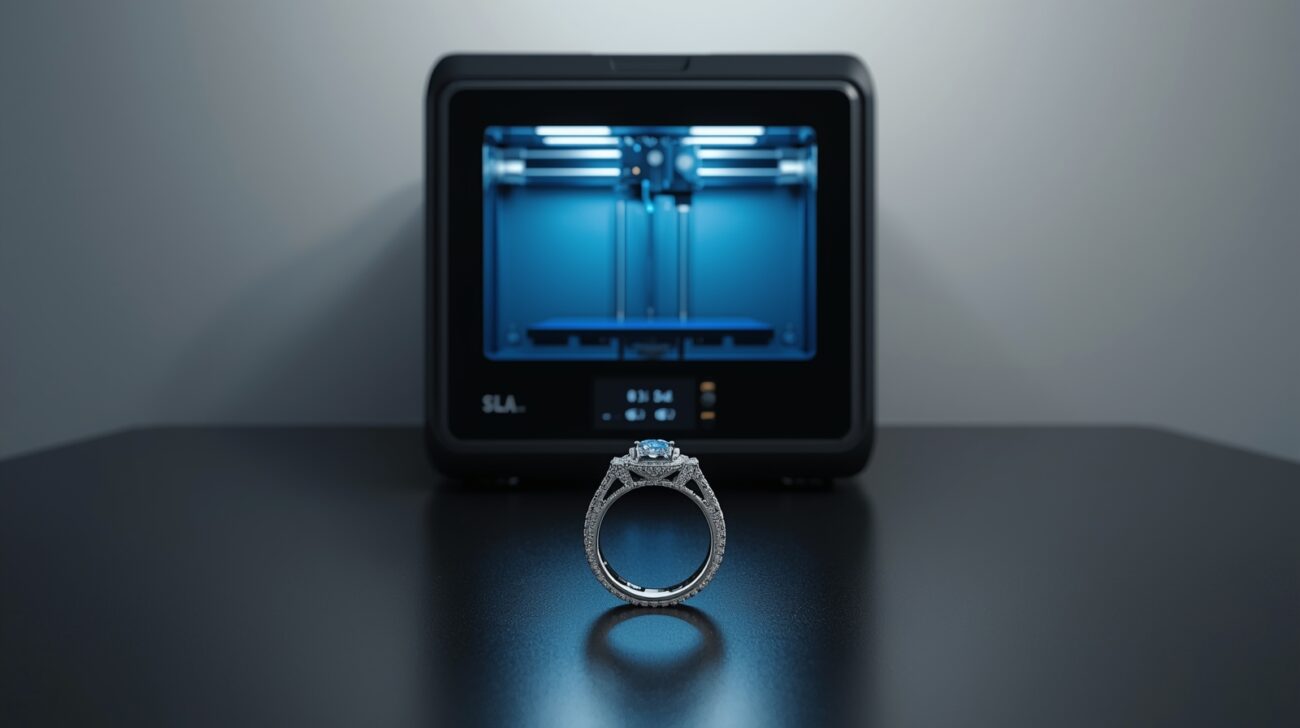
1. SLA Printers (Laser-Based)
SLA printers use a laser to cure resin. They typically offer excellent smoothness and accuracy but may have slower print speeds. They are well-suited for high-detail pieces, especially for rings with curved surfaces.
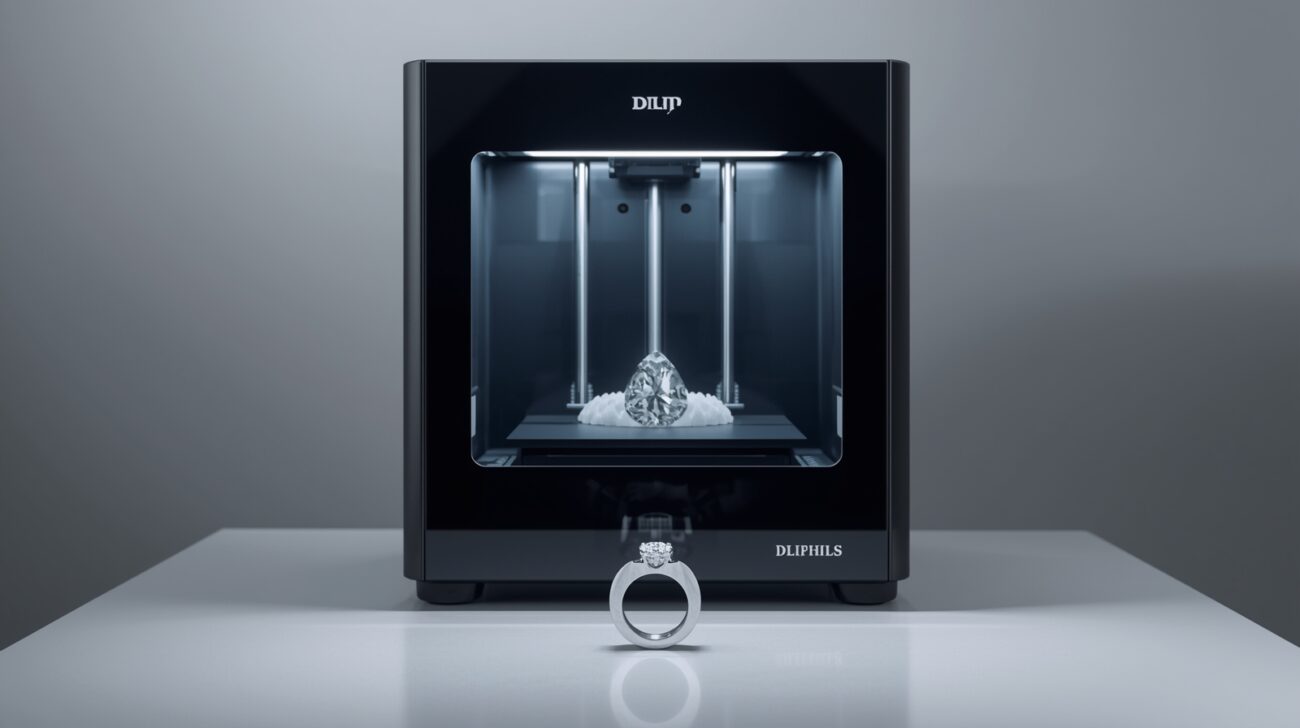
2. DLP Printers (Projector-Based)
DLP printers cure an entire layer at once using a projector. They are often faster than SLA and maintain high accuracy. Many professional jewelers prefer them for production work.
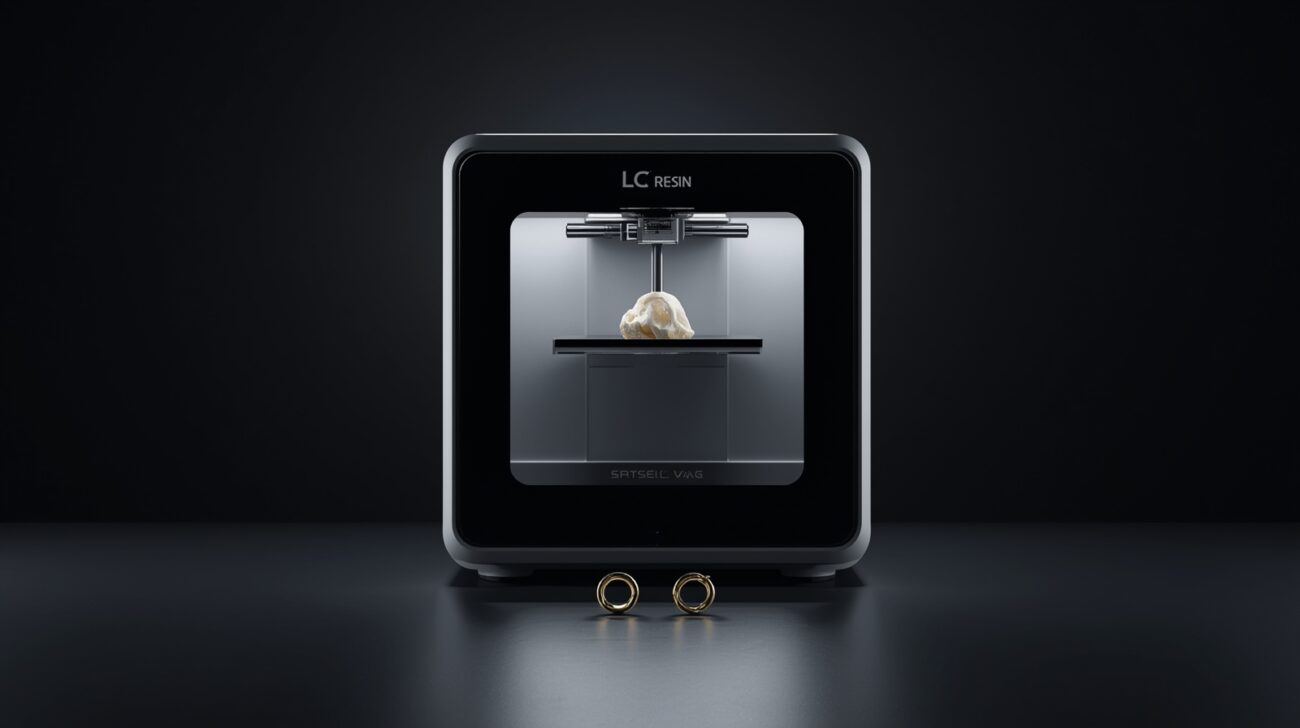
3. LCD Resin Printers
These printers use an LCD screen as a masking tool. They are typically the most affordable, making them ideal for small studios or those starting out. Surprisingly, modern LCD printers can reach extremely high resolutions.
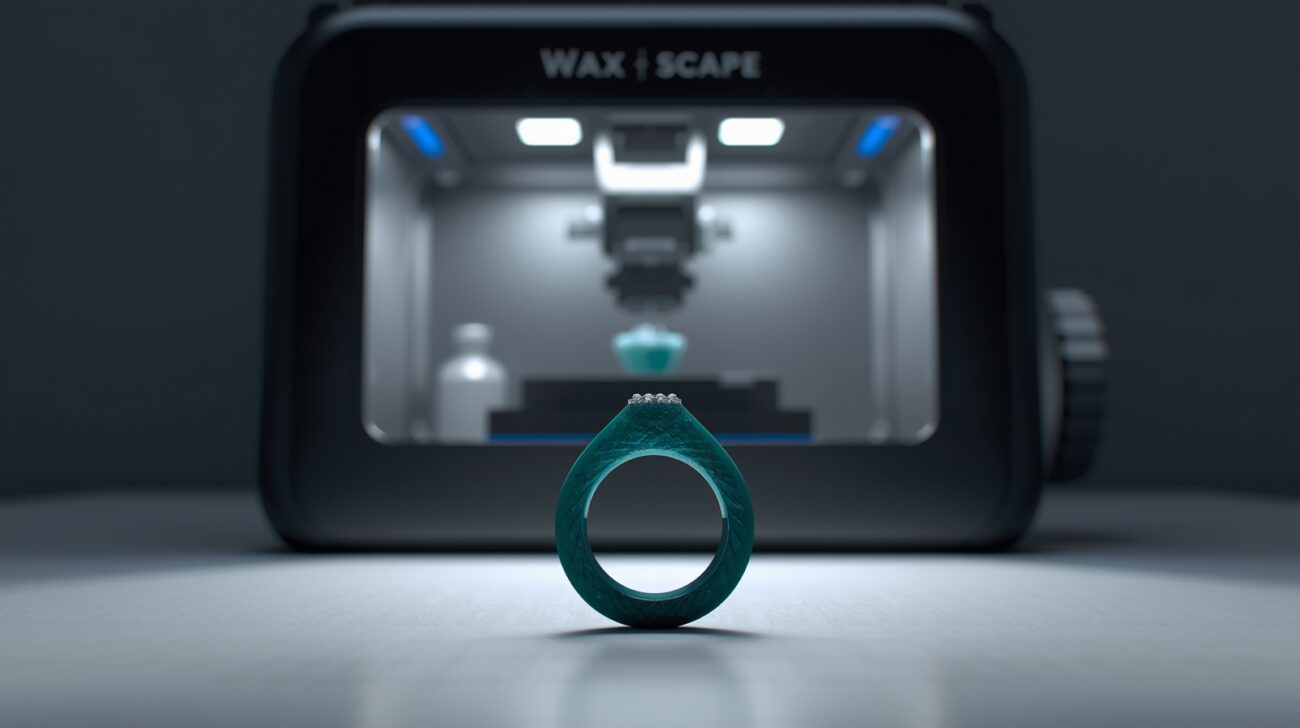
4. Wax 3D Printers
Wax printers (e.g., Solidscape) produce prints that behave exactly like traditional carving wax in casting. These machines are commonly used in high-end manufacturing setups.
Pros and Cons Table
| Technology | Strengths | Limitations |
|---|---|---|
| SLA | Excellent surface smoothness, high precision | Slower print time |
| DLP | Fast, accurate, great for production | Sometimes costly |
| LCD | Affordable, high resolution | Screen lifespan varies |
| Wax Printers | Perfect burnout, best for luxury casting | Very expensive, slower |
Best 3D Printers for Jewelry in 2025
Below is a practical, jeweler-focused breakdown of the top-performing printers used today. No technical jargon — just what matters for real jewelry production.
1. Formlabs Form 3+
Form 3+ is widely used in jewelry studios because of its clean surface finish and reliable castable resin options. Its laser-based SLA system provides consistent results across various ring and pendant shapes.
Why Jewelers Choose It
- Very smooth surfaces
- Excellent castable resin results
- Stable calibration
- Works well for both small and large batches
Limitations
- Slower than DLP printers
- Resin cartridges can be expensive
Best For: Jewelers who want dependable quality with minimal tuning.
2. B9 Core 5 Series XL
This is a popular choice in professional workshops. Its accuracy is trusted by jewelers who require sharp edges, clean pavé seats, and precise tolerances.
Why It Stands Out
- Fast DLP exposure system
- High accuracy in micro-details
- Designed with jewelers in mind
- Very consistent printing
Limitations
- Higher initial investment
- Works best with its own resin range
Best For: High-output jewelry studios.
3. Asiga Max UV
Asiga printers are known for their reliability across industries, including dentistry and jewelry. Their open material system is a major advantage.
Why Jewelers Like It
- Open materials allow many castable resins
- Excellent accuracy
- Strong build quality
- Predictable calibration
Limitations
- Higher price range
- Requires learning its workflow
Best For: Jewelers who want flexibility in resin choices.
4. Solidscape S360 (Wax Printer)
This is the closest alternative to traditional hand-carved wax. Pieces printed on Solidscape machines burn out perfectly and are favored by luxury jewelry houses.
Why It’s Unique
- True wax, not resin
- Zero ash
- Excellent for filigree and very thin structures
Limitations
- Expensive
- Much slower than resin printers
Best For: High-end casting houses and premium jewelry brands.
5. Phrozen Sonic Mini 8K
Phrozen’s 8K resolution produces extremely sharp models, even on small pieces. It is surprisingly affordable for the level of detail it offers.
Strengths
- Ultra-high resolution
- Great surface quality
- Very budget-friendly
- Works with multiple castable resins
Limitations
- Smaller build volume
- Requires careful calibration
Best For: Small studios and designers working on rings and miniatures.
6. Anycubic Photon M3 Premium
A reliable option for beginners or designers who want quality on a budget. Recent upgrades make it suitable for casting resin work.
Why It’s a Good Starter Option
- Affordable
- Strong 6K/8K resolution
- Easy to maintain
- Castable resin compatibility improving over time
Limitations
- Not as consistent as premium printers
- Occasional re-calibration needed
Best For: Learning workflows and small-scale production.
7. Elegoo Mars 4 Ultra
This printer is often used in small jewelry setups due to its simplicity and speed. It works well with third-party castable resins.
Highlights
- Fast printing
- Good accuracy
- Low maintenance costs
- Easily available spare parts
Limitations
- Not ideal for very fine pavé details
- Quality varies based on resin choice
Best For: Budget-conscious designers.
Comparison Table: Best 3D Printers for Jewelry (2025)
| Printer | Resolution | Best Material | Price Level | Best For |
|---|---|---|---|---|
| Form 3+ | Excellent | Castable resin | High | Daily studio use |
| B9 Core 5 XL | Excellent | Jewelry resin | High | Professional production |
| Asiga Max UV | Excellent | Wide resin range | High | Open-material flexibility |
| Solidscape S360 | Perfect | Wax | Very high | Luxury casting |
| Phrozen Mini 8K | Very high | Castable resin | Medium | Fine-detail rings |
| Anycubic M3 Premium | High | Castable resin | Low | Beginners |
| Elegoo Mars 4 Ultra | High | Castable resin | Low | Budget studios |
Jewelry Design Files to Support Your 3D Printing Workflow
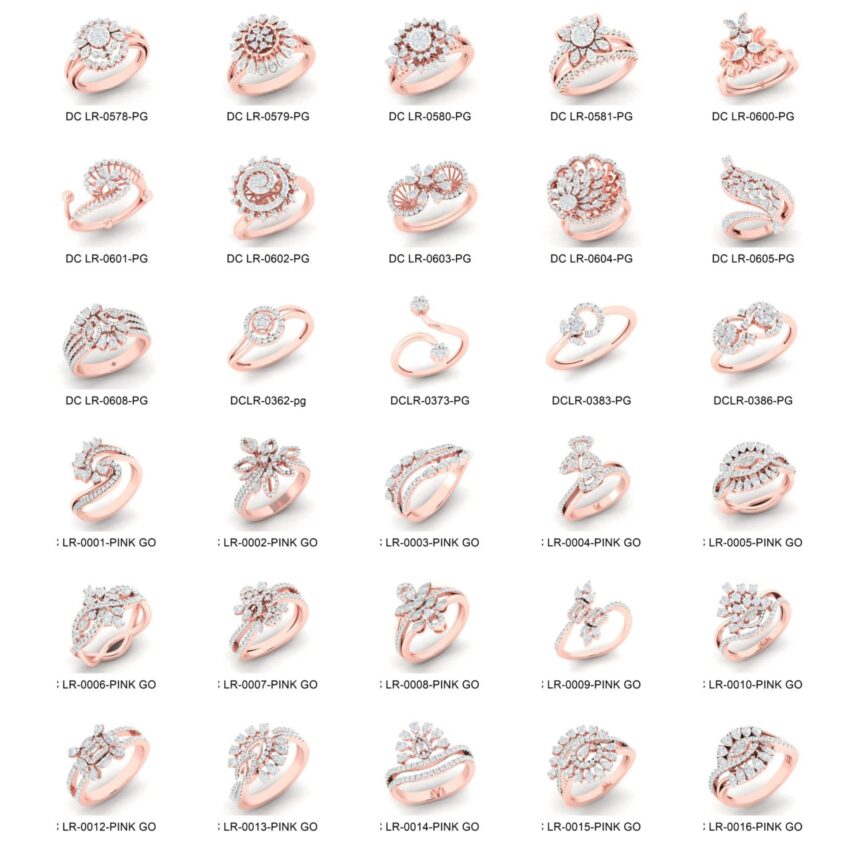
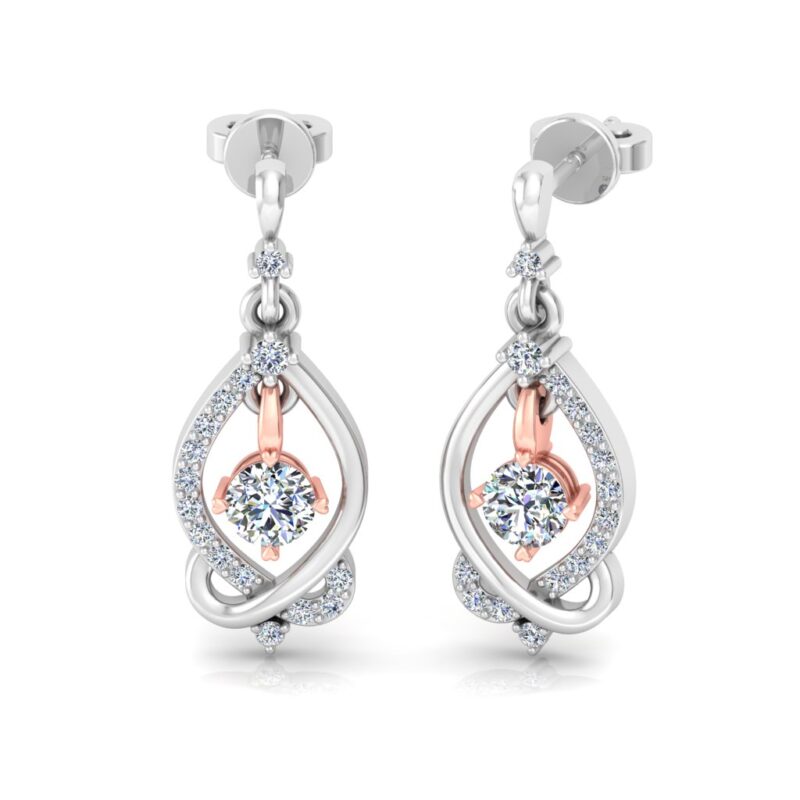
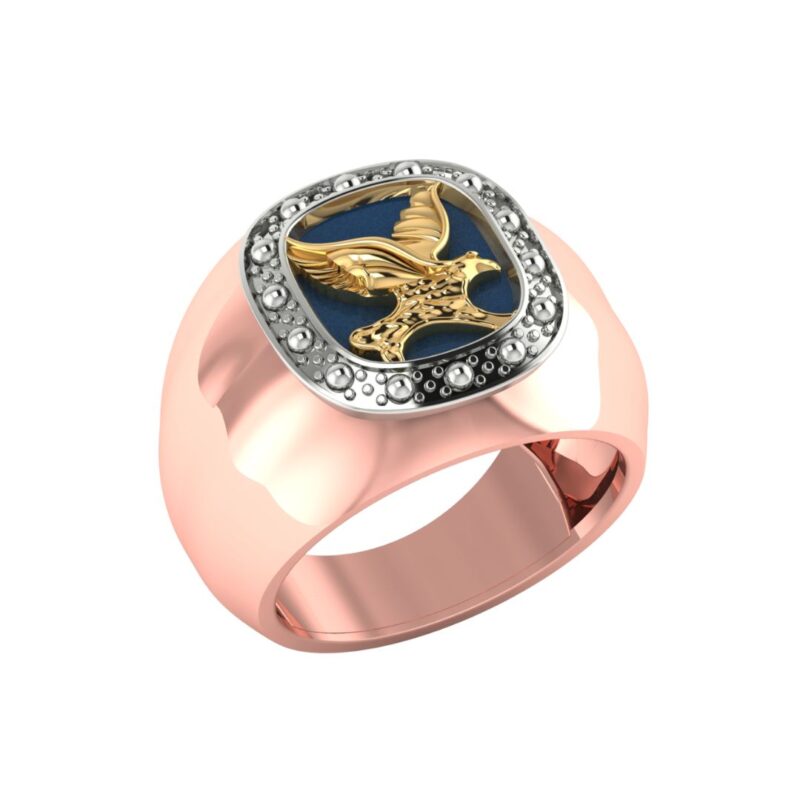
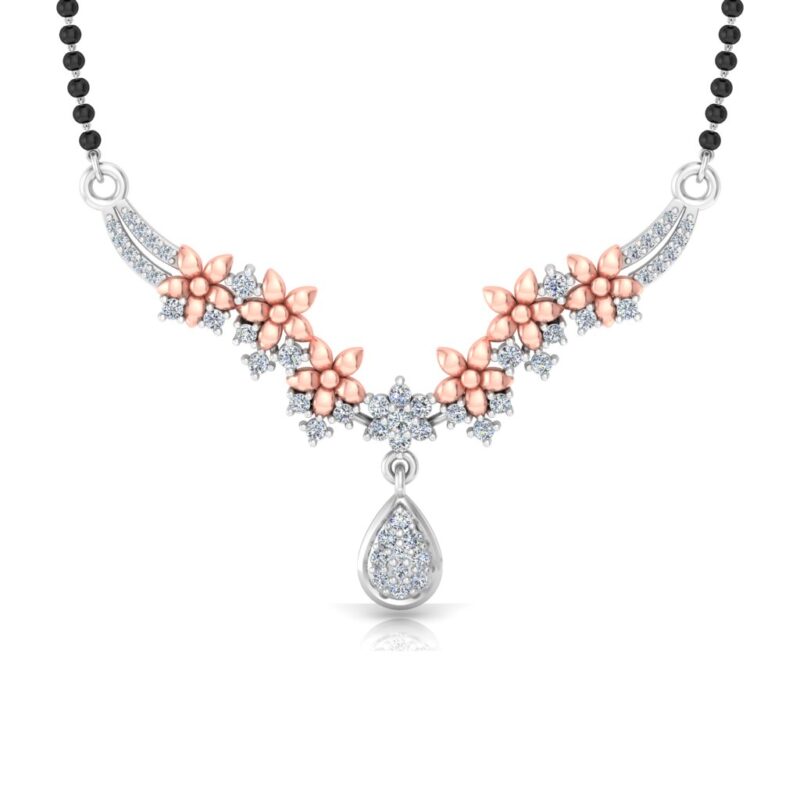
Once you have the right 3D printer, the next step is working with reliable jewelry models. Many jewelers prefer a mix of in-house CAD design and professional ready-made files to speed up their workflow. To make this easier, we’ve organized a collection of STL and 3DM files that are already optimized for printing and casting. Below is a quick look at some of our popular categories.

Designed for Smooth Printing and Clean Casting Results
Every file in our library is created with practical production needs in mind — smooth surfaces, proper wall thickness, and clean, support-friendly geometry. Whether you’re experimenting with a new printer or handling daily client orders, these models give you a solid starting point for fast, consistent results without unnecessary adjustments.
Jewelry Casting Quality: What Actually Matters
3D printing is only one part of the process. For a model to cast cleanly, several factors play a major role:
1. Smoothness
Less polishing means more preserved details. This is especially important for engraved patterns and tiny prongs.
2. Burnout Behavior
Castable resins and waxes need to disappear cleanly during burnout. Poor-quality resin can leave ash or cause cracks in investment.
3. Strength Before Casting
A weak print may warp during handling, especially for thin claw settings.
4. Dimensional Accuracy
Even a 0.05 mm deviation can ruin the fit of a stone seat.
How to Get the Best Results from Any Jewelry 3D Printer
No matter how advanced the machine is, the print workflow affects output more than most people realize.
1. Orientation
Ring bands print best when angled. This reduces layer lines on curved surfaces and prevents warping.
2. Supports
Supports should be placed:
- Under prongs
- On thicker parts of the shank
- Away from visible surfaces whenever possible
Smart placement reduces cleanup work.
3. Layer Height Settings
Lower layer height creates smoother surfaces but increases print time. Jewelers usually choose:
- 25 microns for rings
- 35–50 microns for larger pendants
4. Washing and Curing
Over-curing can make resin brittle. Under-curing can distort fine edges. Balanced curing is key.
5. Consistent Exposure Settings
Changing exposure frequently can result in unpredictable prints. Stick with a proven profile.
Best 3D Printer for Jewelry
Modern jewelry manufacturing relies heavily on precision tools, and this is one of the main reasons many designers spend a good amount of time comparing different jewelry 3D printers before making a final decision. A reliable machine can completely change how efficiently a studio works, especially when handling multiple custom orders each week. Many professionals say that the Best 3D Printer for Jewelry is not always the most expensive one, but the one that consistently produces smooth surfaces, sharp details, and castable patterns that behave well in the flask. This is why jewelers who have been in the industry for years continue to invest in advanced 3D printers that match their workflow instead of switching to general-purpose machines.
The growth of jewelry-focused technology has also made the market more competitive. Smaller workshops now have access to the same tools that large studios use, and this shift is mostly due to the availability of affordable jewelry 3D printers with impressive resolution. When selecting the Best 3D Printer for Jewelry, jewelers often consider the balance between speed, accuracy, and the type of castable materials they prefer. Some prefer high-end DLP models, while others achieve excellent results using mid-range 3D printers that perform well with the right resin and slicer settings. Regardless of the machine, the goal remains the same: to produce clean patterns that require minimal correction before casting.
Professional designers frequently mention that high-quality jewelry 3D printers allow them to focus more on creativity and less on technical troubleshooting. The value of owning the Best 3D Printer for Jewelry shows up not only in the quality of the final cast but also in the time saved during production. When a printer can repeat the same level of detail on every job, it becomes easier to manage deadlines and client expectations. This reliability is especially important for studios handling complex engagement rings, micro-pavé work, or highly detailed pendant designs where accuracy cannot be compromised. In these cases, choosing the right 3D printers becomes a long-term business decision rather than a simple equipment purchase.